PSG16 and PSG5 Pump Controller Repair: Symptoms, Causes and Electronics Repair Process
Published on 10/14/2026
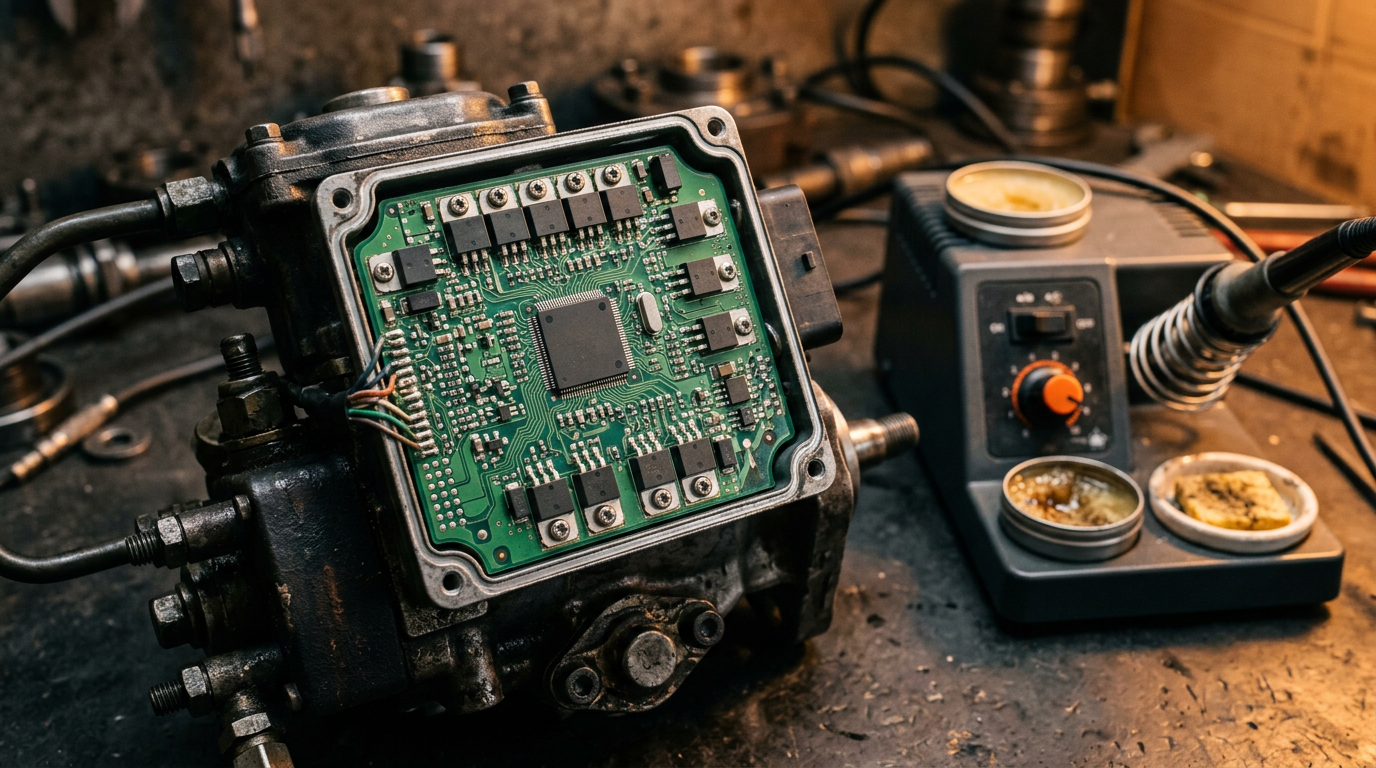
The PSG (Pumpen-Steuergerät) is an electronic module bolted directly to the Bosch VP44 injection pump. It calculates injection timing and quantity based on signals from the engine control unit and sensors inside the pump itself. The two most common families are PSG16 and PSG5. Their failure is one of the main causes of VP44 pump problems and usually does not mean the whole pump should be scrapped. At Diesel Serwis in Gliwice we repair controller electronics at component level.
What does the PSG do?
The PSG receives the requested quantity and injection timing from the engine ECU and then drives the high-pressure solenoid valve and the injection timing valve. It also reads the pump shaft angle sensor and the fuel temperature sensor. Communication with the engine computer runs over a dedicated link, and any fault in this exchange can trigger limp mode.
Symptoms of a faulty PSG controller
- Engine stalling while driving, often once warm, restarting after several minutes.
- Momentary jerking and loss of power with no obvious mechanical cause.
- No start despite a healthy starter and battery.
- Engine warning light and pump communication faults.
- Intermittent symptoms depending on temperature, vibration or humidity.
Why do PSG controllers fail?
The module works in a harsh environment: it is mounted on the engine, exposed to vibration and temperature swings, and its cooling depends on fuel flowing through the pump. The most common causes are cracked solder joints, degraded power transistors, failed capacitors and connector corrosion after moisture ingress. Low supply voltage and poor grounds also shorten the life of the electronics.
Table: fault, effect, our repair
| Electronics fault | Effect | Our repair |
|---|---|---|
| Cracked solder joints | Intermittent symptoms, stalling | Re-soldering and securing the connections |
| Failed power transistor | No valve control | Component replacement |
| Failed capacitors | Unstable supply | Capacitor replacement |
| Connector corrosion | Communication faults | Cleaning and track repair |
How we diagnose a PSG controller
- External and internal inspection – we look for signs of overheating, moisture and mechanical damage.
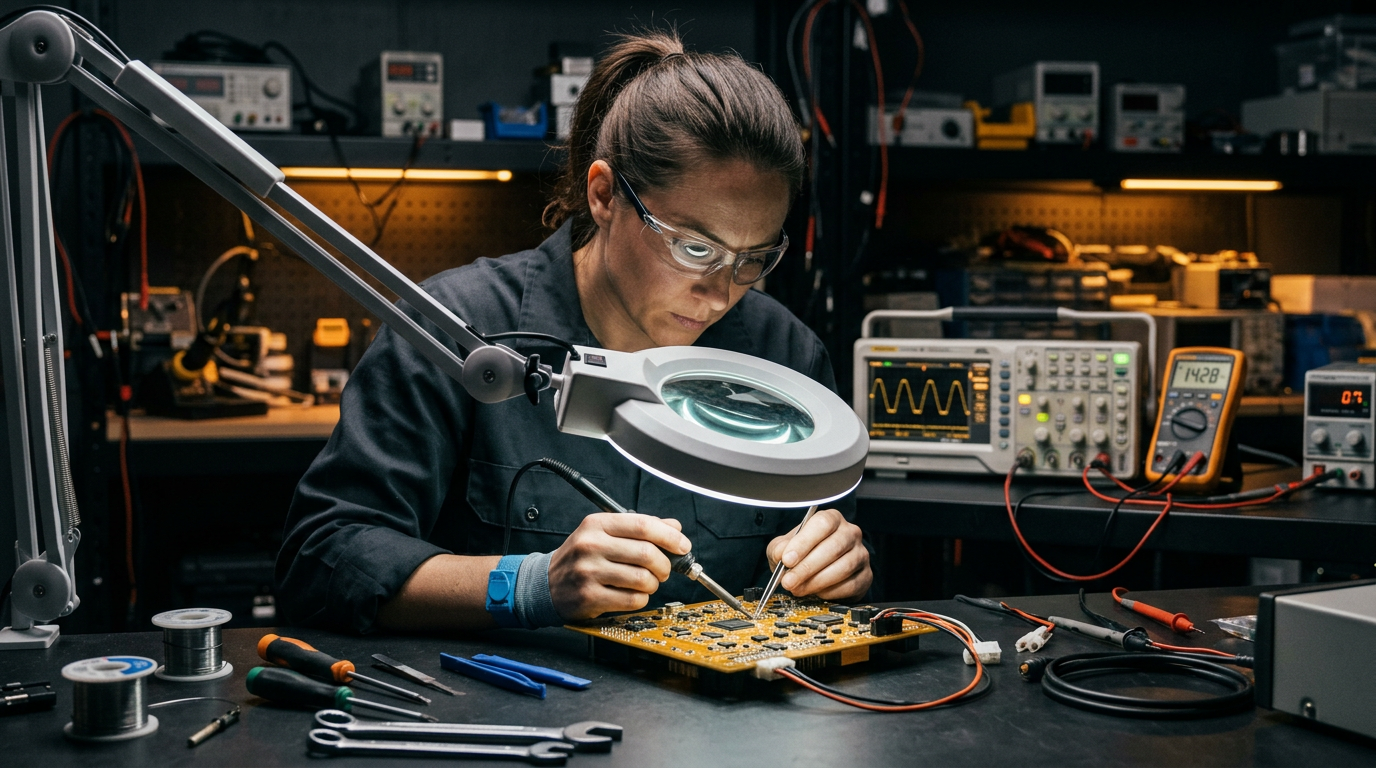
- Electrical measurements with a multimeter and oscilloscope on key circuits.
- Functional test of the module working with the pump on a test stand.
- Sensor verification – angle and fuel temperature.
Repair instead of replacing with a substitute
Replacing the controller with another unit can be troublesome because the module works with the engine computer and the vehicle security system. Repairing the original module avoids coding and matching problems in many cases. After the repair we test the controller together with the pump to make sure everything works correctly.
Does the whole pump always need a rebuild?
No. If the inside of the pump is healthy and the fault concerns only electronics, repairing the controller alone can fully solve the problem. However, if there are metal particles in the fuel filter, we also recommend rebuilding the hydraulic part. The scope is decided by diagnostics.
How to extend the life of a PSG controller
Keep the fuel clean and change the filter regularly, because fuel flow cools the module. Check battery voltage and the condition of engine and body grounds. Avoid pressure-washing the engine bay around the pump.
Service from Gliwice for all of Poland
We accept controllers and pumps in person and by mail. We work Monday to Friday, 8:00 to 16:00, at ul. Jasna 25 in Gliwice. The repair cost is set individually after diagnostics and the quote is free. Call +48 504 511 170.
FAQ
Can a PSG controller be repaired instead of buying a new one?
Yes. In many cases we repair the electronics at component level, which restores the module and lets you keep the original controller.
How do I tell a PSG fault from a hydraulic fault in the pump?
Temperature-dependent and intermittent symptoms usually point to electronics, while metal particles in the filter and hard starting point to hydraulic wear. Bench diagnostics give certainty.
Does anything need coding in the car after a controller repair?
Repairing the original module usually avoids the coding that may be needed after swapping in another unit. If in doubt, we will advise over the phone.
Can I send just the controller without the pump?
In many cases yes, but the best results come from testing the controller together with the pump. Call us and we will agree the best way.