Bosch VP44 Pump: Failure Symptoms, Causes and Step-by-Step Rebuild
Published on 10/6/2026
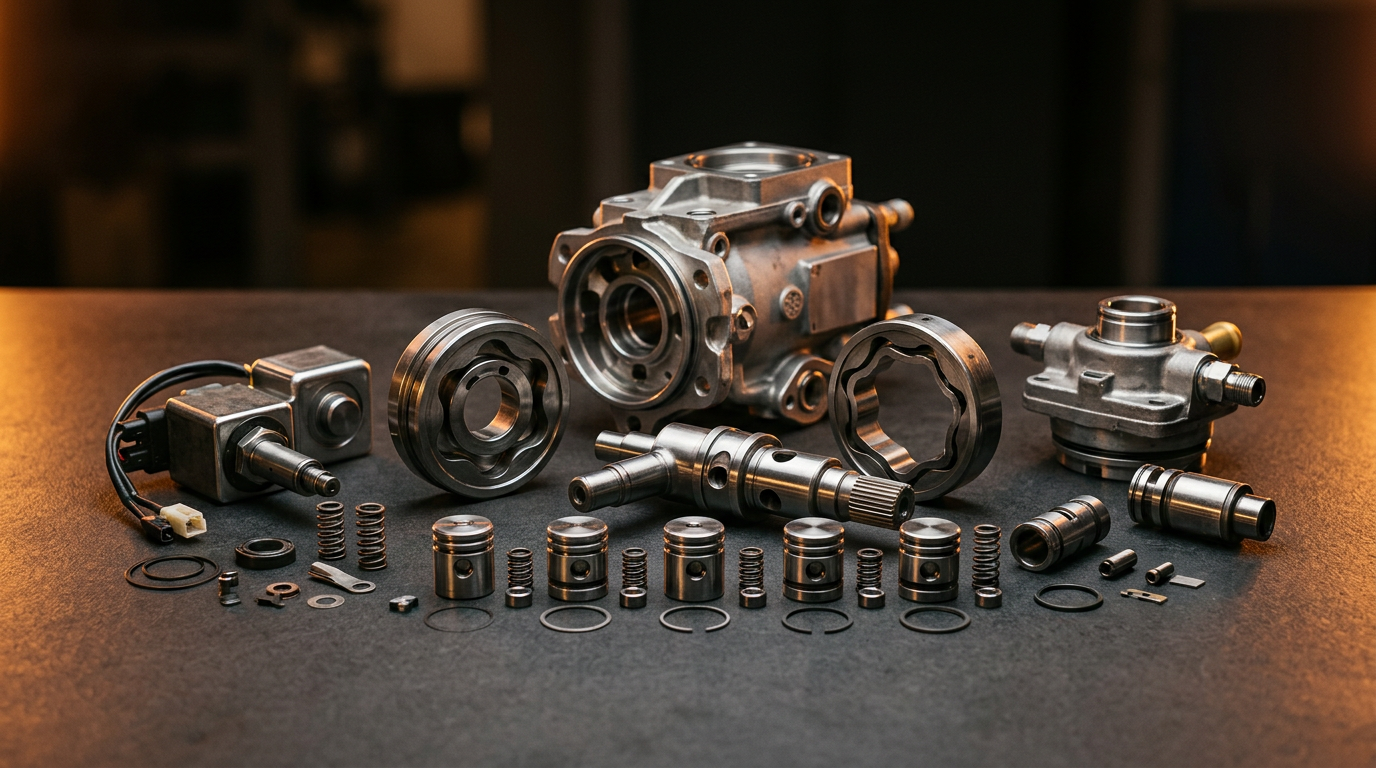
The Bosch VP44 is an electronically controlled radial-piston distributor pump fitted to diesel engines from the late 1990s and early 2000s. It generates pressure of around 1400 bar and is managed by its own electronic module, the PSG, mounted directly on the pump housing. The design is powerful but sensitive to fuel quality, temperature and supply voltage. At Diesel Serwis in Gliwice we rebuild VP44 pumps every day, so we know exactly which symptoms should worry a driver.
Where is the VP44 used?
VP44 pumps were fitted to engines such as the Opel 2.0 and 2.2 DTI, BMW M47 and M57 (320d, 330d, 525d), Audi and Volkswagen 2.5 TDI V6, and selected Ford models. The exact list depends on model year and engine version, so before shipping a pump please call us with the part number from the data plate. We service numbers including 0470504012, 0470504015, 0470504022, 0470504035 and 0470504040.
Most common symptoms of a failing VP44
- Stalling when hot – the engine dies once warm and restarts only after cooling down. A classic sign of an overheating PSG module or a worn angle sensor.
- Sudden loss of power and limp mode – the car jerks, ignores the throttle and the engine light comes on for no obvious reason.
- Hard starting – long cranking or no start at all.
- Rough idle and higher fuel consumption.
- Metal particles in the fuel filter – a sign of advanced internal wear that needs urgent attention.
Why do VP44 pumps fail?
The inside of the pump is lubricated by fuel alone, so poor diesel, water in the tank or a clogged filter quickly destroy the rotor, cam ring and radial pistons. The second source of failure is electronics: the PSG is cooled by the fuel flowing through the pump, and vibration plus thermal cycling crack solder joints and degrade power transistors. The third group is sensors: the pump shaft angle sensor, the fuel temperature sensor and the solenoid valve.
Table: symptom, cause, our action
| Symptom | Likely cause | What we do |
|---|---|---|
| Stalls when hot | PSG module, angle sensor | Electronics test, repair or component replacement |
| No power, limp mode | Solenoid valve, worn vane pump | Pressure measurement on the test bench, replacing worn parts |
| Hard starting | Worn rotor or pistons | Full rebuild with clearance measurement |
| Particles in filter | Internal seizure | Disassembly, ultrasonic cleaning, rebuild |
How we rebuild a VP44 pump
- Intake and preliminary diagnostics – we check the exterior, fuel leaks and electrical parameters.
- Full disassembly and ultrasonic cleaning of all hydraulic components.
- Measurement and replacement – we verify the rotor, cam ring, pistons, vane pump and seals, replacing worn parts.
- PSG module verification – checking transistors and sensors and repairing the electronics where needed.
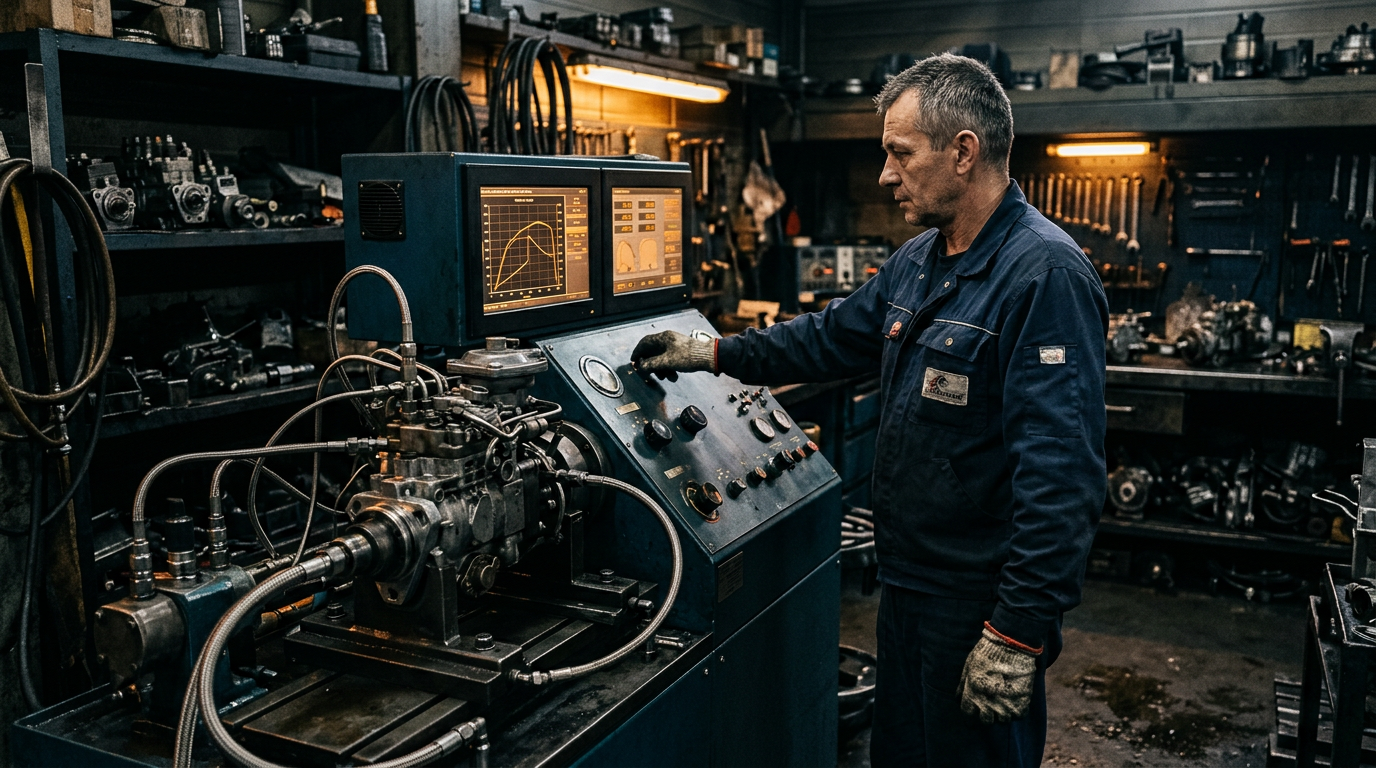
- Assembly and calibration on a professional test bench to manufacturer specifications.
- Test report and return of the pump with a warranty on the work performed.
What to do after a pump failure
After the rebuild always replace the fuel filter and inspect the tank for sediment, water and metal particles. Without this, a new pump can fail for the same reason. Also check battery voltage and ground connections, because low supply voltage stresses the PSG electronics. We advise against continued driving once seizure symptoms appear, because particles spread through the whole fuel circuit.
Serving Gliwice, Silesia and all of Poland
We work at ul. Jasna 25 in Gliwice, Monday to Friday, 8:00 to 16:00. Customers from Silesia are served in person, and pumps from the rest of the country are accepted by mail. The cost of a rebuild depends on the extent of wear, so we provide a free individual quote after diagnostics. Call +48 504 511 170 and describe the symptoms.
FAQ
Does a VP44 pump always have to be replaced with a new one?
No. In most cases a rebuild with replacement of worn components and calibration on a test bench restores full performance. The scope is decided by diagnostics after disassembly.
Is an engine that stalls when hot always a pump problem?
Most often yes, but the cause can also be a shaft position sensor, wiring or the power supply. That is why we check all electrical parameters before rebuilding.
How do I send a pump for rebuild?
Pack the removed pump securely in a box, cap the ports and include a description of the symptoms and your contact details. Call us first to agree on shipping.
How long does a VP44 rebuild take?
It depends on the extent of damage and parts availability. We give a lead time after diagnostics, on working days from 8:00 to 16:00.